
Exhibit · Article
A Court in Cosmopolitan Exile
Vienna, 1919 — 1939
After the fall of the Habsburg Empire in 1918, the Galician Hasidic dynasties that had survived the Eastern Front — Kopyczynce, Sadigora, Husiatyn, Boyan — relocated their courts to post-imperial Vienna. For two decades the city held a society of rebbes, scribes, and Khasidim who lived between Goethe and the shtetl. They cast Tashlich into the Danube, baked matzah on Schiffgasse, married their children in Leopoldstadt, and rode through the streets of the inner city in Habsburg-era carriages. In March 1938 the Anschluss closed this world. By 1942 most of the men in these photographs were gone.
6 min read
A Court in Cosmopolitan Exile. Vienna, 1919 to 1939.
After the First World War, the Habsburg Empire fell apart. Vienna became the new capital of a small Austrian republic. Hasidic communities from Galicia and Bukovina — Jewish regions of the former empire — settled in Vienna as refugees. Several Hasidic courts re-established themselves in Leopoldstadt, the city's traditionally Jewish quarter. By the 1923 census, Leopoldstadt was almost forty percent Jewish; the wider Viennese Jewish community numbered roughly two hundred thousand, the third-largest in Europe. The displaced rebbes who set up shtibels — small prayer-and-study rooms — in Leopoldstadt included the Sadigura, Husiatyn, Kopyczynce, Tshortkov and Vizhnitz courts, all branches of the Ruzhiner dynasty. In September 1929 the city hosted the Second Knessiah Gedolah, the great assembly of Agudath Israel.
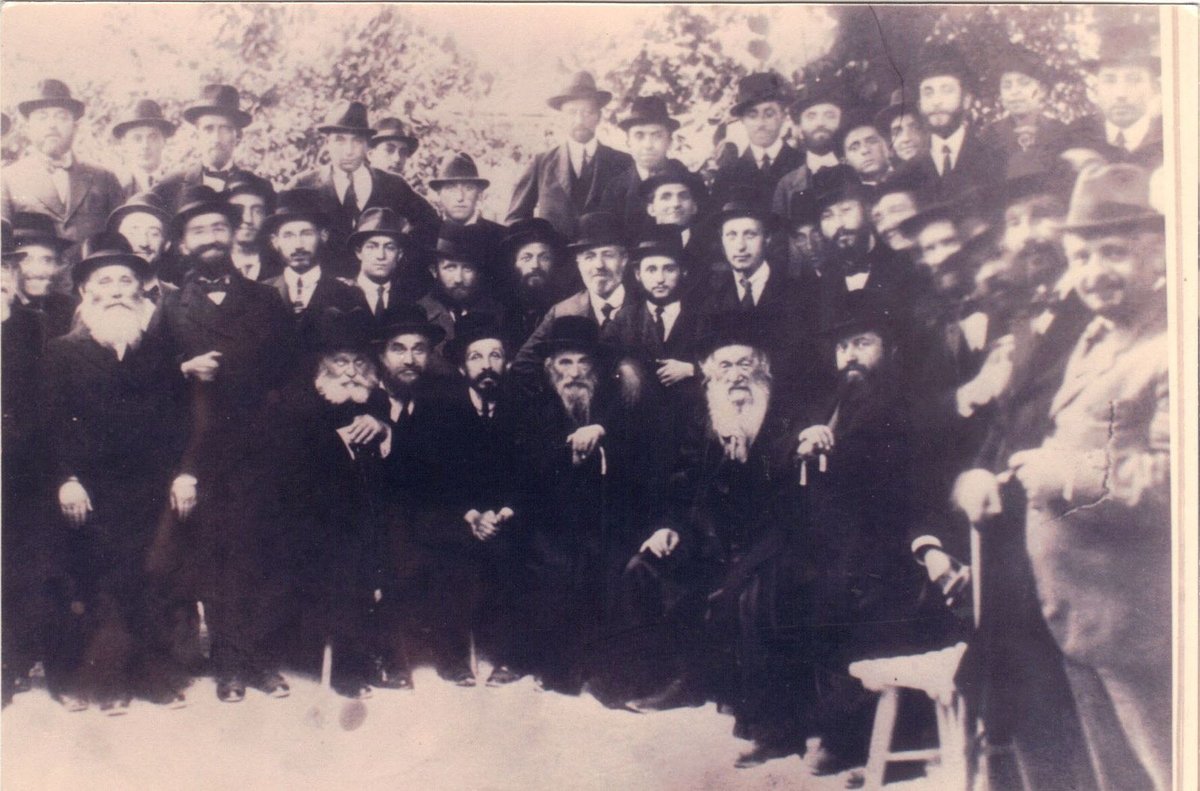
Baden, near Vienna, around 1920. The laying of the cornerstone for a Jewish orphanage. The home was a project of the War Orphans Fund of Agudath Israel and opened to children in 1921. Some forty thousand Jewish soldiers of the Austro-Hungarian army had been killed at the front between 1914 and 1918; their orphans were the children this home was built for. Seated, from right to left: Rabbi Ben Zion Katz, Av Beis Din of Chernivtsi; Rabbi Avraham Menachem Steinberg of Brody, author of the Machaze Avraham; Rabbi Meir Arik; Rabbi Avraham Yehoshua Heshel of Kopyczynce; Rabbi Yitzhak Kalman of Vytvyniavchyk; Rabbi Gershon Wienstok of Kitov. Av Beis Din means head of the local rabbinical court.
Vienna, between 1924 and 1935. Rabbi Avraham Yehoshua Heshel of Mezhbuzh-Ternopil seated in a carriage on the streets of the city, with his uncle Rabbi Yisrael of Husiatyn and his brother Rabbi Moshe Heshel. Rabbi Yisrael had been the Husiatyner Rebbe in Galicia until 1914; like the other Ruzhiner rebbes, he transferred his court to Vienna at the outbreak of the First World War. Beside this photograph: Rabbi Avraham Yehoshua Heshel of Kopyczynce, the Kopyczynitzer Rebbe of Vienna. He had succeeded his father, Rabbi Yitzchak Meir, who founded the Kopyczynce court in 1894 and likewise fled to Vienna in 1914. Photograph dated between 1924 and 1939.
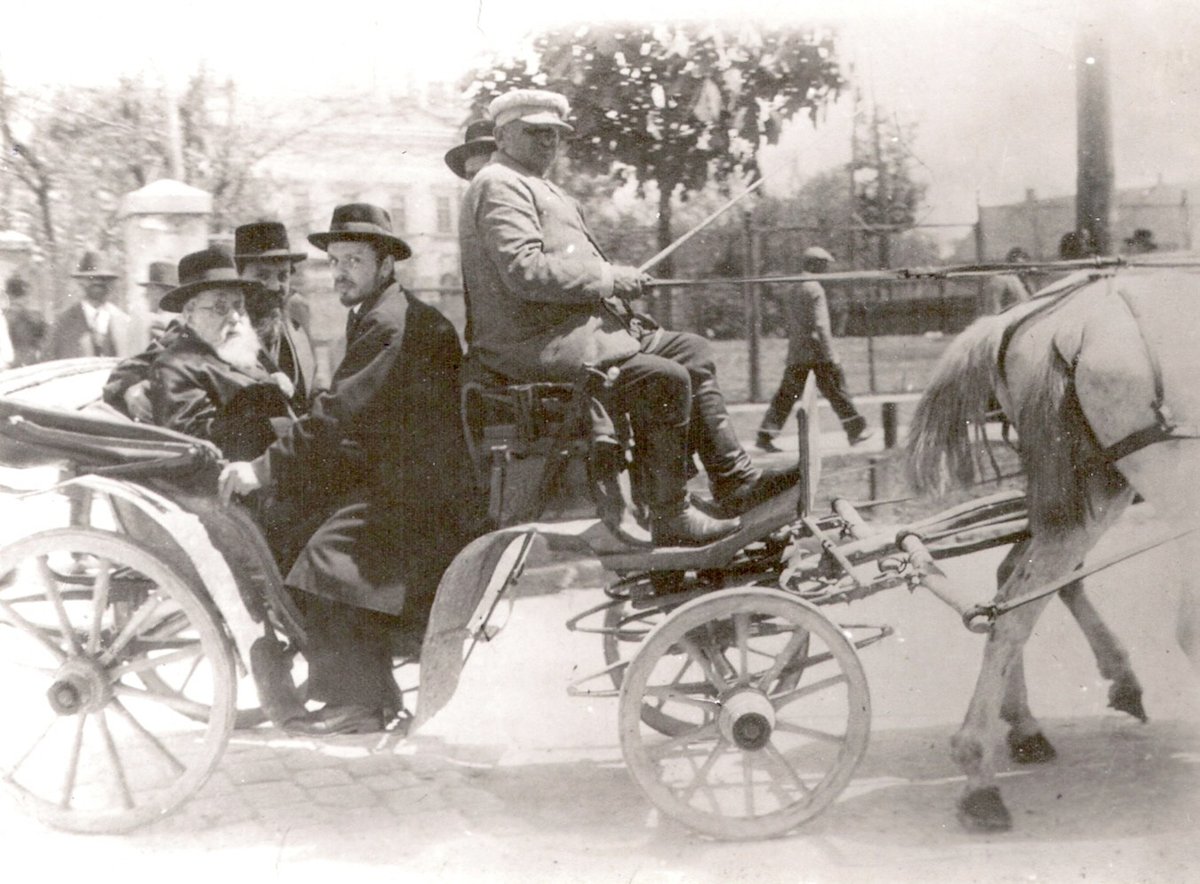
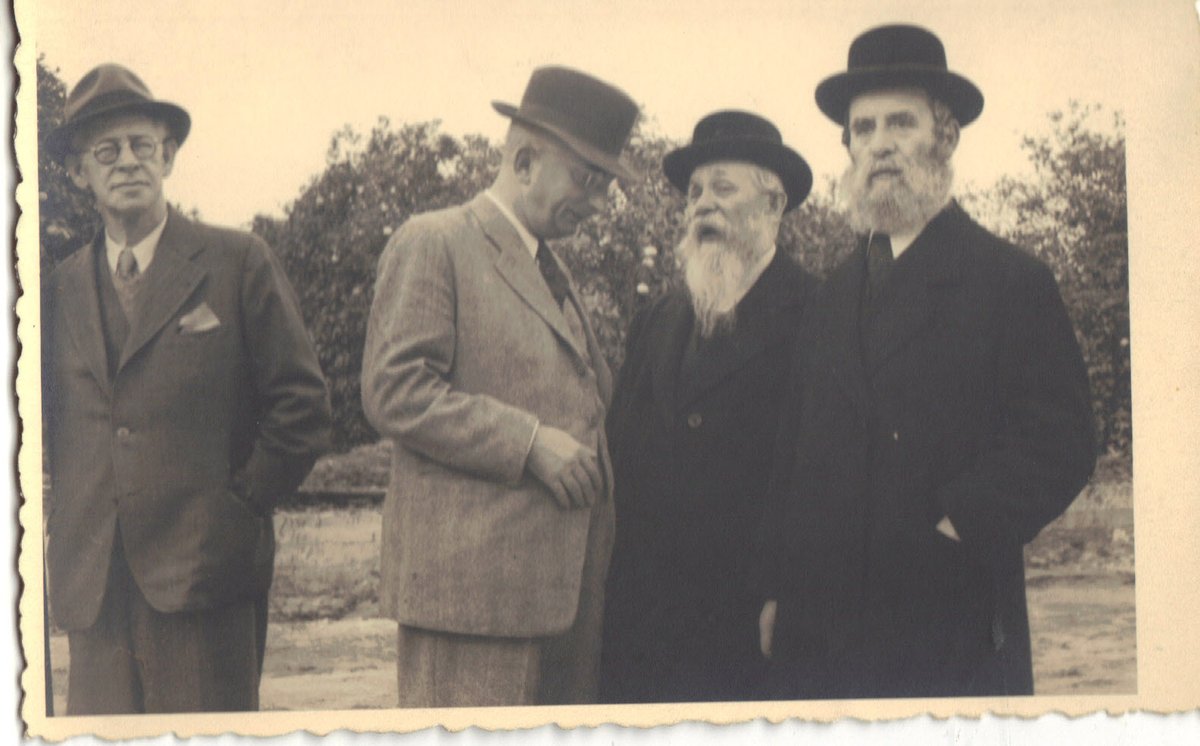
Rabbi Avraham Yehoshua Heshel of Mezhbuzh-Ternopil Sitting in a Carriage on the Streets of Vienna with his Uncle Rabbi Yisrael of Husiatin — תרפ"ה-תרצ"ה / Rabbi Avraham Yehoshua Heshel of Kopyczynce and his brother-in-law Rabbi Avraham Yaakov 'Abir Yaakov' of Sadigura — תר"צ-תרצ"ט
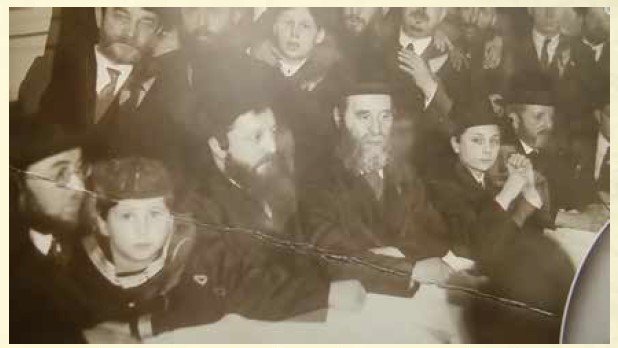
Vienna, 1925 or 1926. The bar mitzvah of Israel Aharon Wolf. The boy stands between two of his uncles: Rabbi Avraham Yaakov Friedman of Sadigura — known by the title of his Torah work, the Abir Yaakov — and his nephew Rabbi Mordechai Shalom Yosef Friedman of Sadigura, the Knesses Mordechai. The Sadigura dynasty had been founded in 1850 by Rabbi Avraham Yaakov's grandfather and namesake, a son of Rabbi Yisrael of Ruzhin. With the outbreak of war in 1914, the Sadigura rebbes fled Bukovina for Vienna and remained there for the next twenty-four years. On the right is the boy's father, Rabbi Zvi.
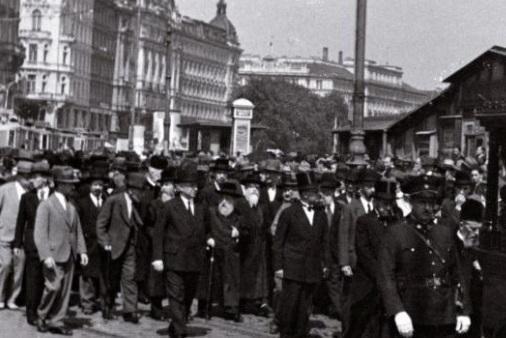
December 14, 1927. The funeral of Rabbi Zvi Pesach Chajes — in German, Zwi Perez Chajes — who had served as chief rabbi of Vienna from 1918 until his death the previous day. Chief rabbi of the second-largest Jewish community in Europe, Chajes was an unusual figure: a Galician-born Talmudist, a Zionist, and a biblical scholar at a time when those positions sat in tension with one another. His death at fifty-one closed nine years of communal leadership. Rabbi Avraham Yehoshua Heshel of Kopyczynce walks with his uncle Rabbi Yisrael of Husiatyn and his uncle-in-law Rabbi Yaakov of Husiatyn. Behind them, the chazzan — cantor — who had led the service.
December 14, 1927. [short pause] The funeral of Rabbi Zvi Pesach Chajes — in German, Zwi Perez Chajes — who had served as chief rabbi of Vienna from 1918 until his death the previous day.
December 14, 1927.
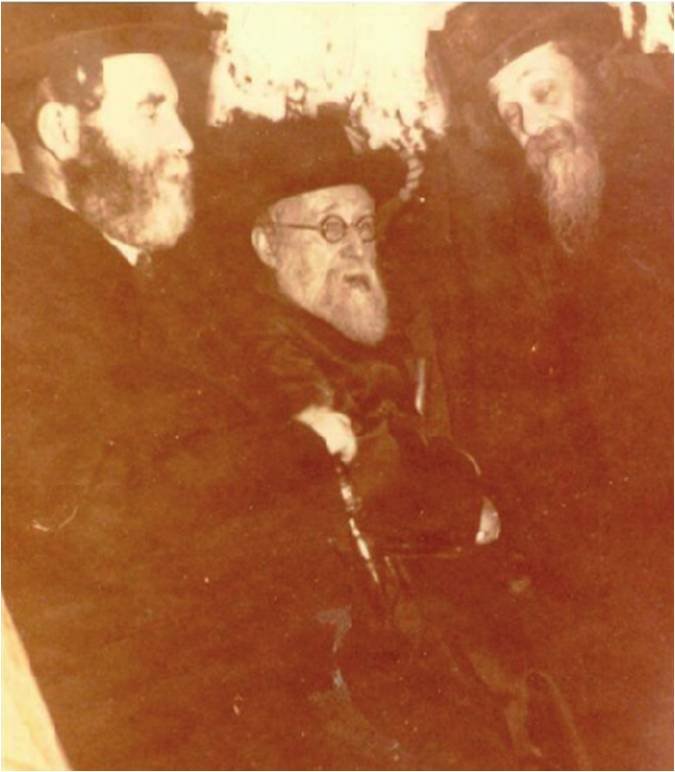
Matzah baking in Vienna, between 1924 and 1939. On the right, Rabbi Avraham Yehoshua Heshel of Kopyczynce. In the middle, his uncle Rabbi Yisrael of Husiatyn. Beside them, his brother-in-law Rabbi Avraham Yaakov of Sadigura, the Abir Yaakov. The presence of so many rebbes meant the city's Hasidic community produced matzah on a scale unusual outside Galicia: stringent supervision, a long ritual day, water drawn the night before. The shmurah — "guarded" — matzah baked here served the Sadigura, Husiatyn and Kopyczynce courts and their followers across the city.
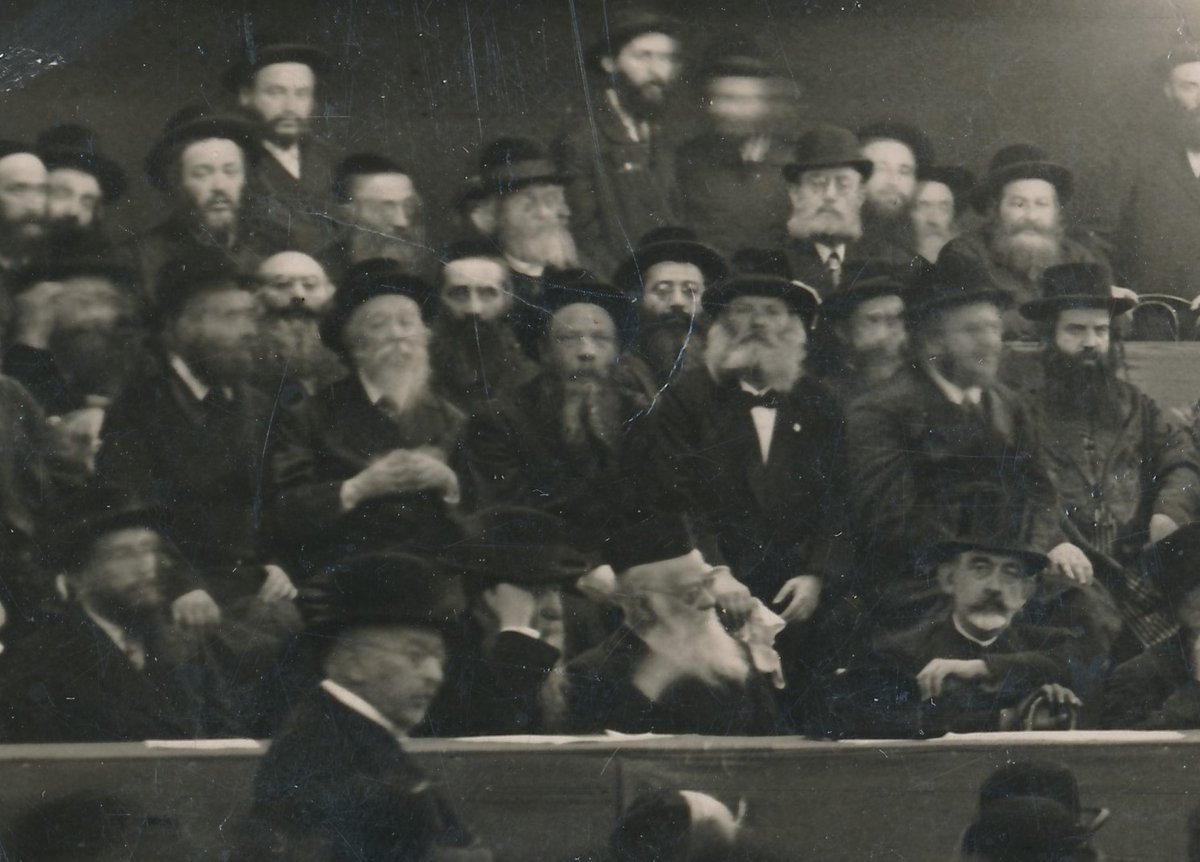
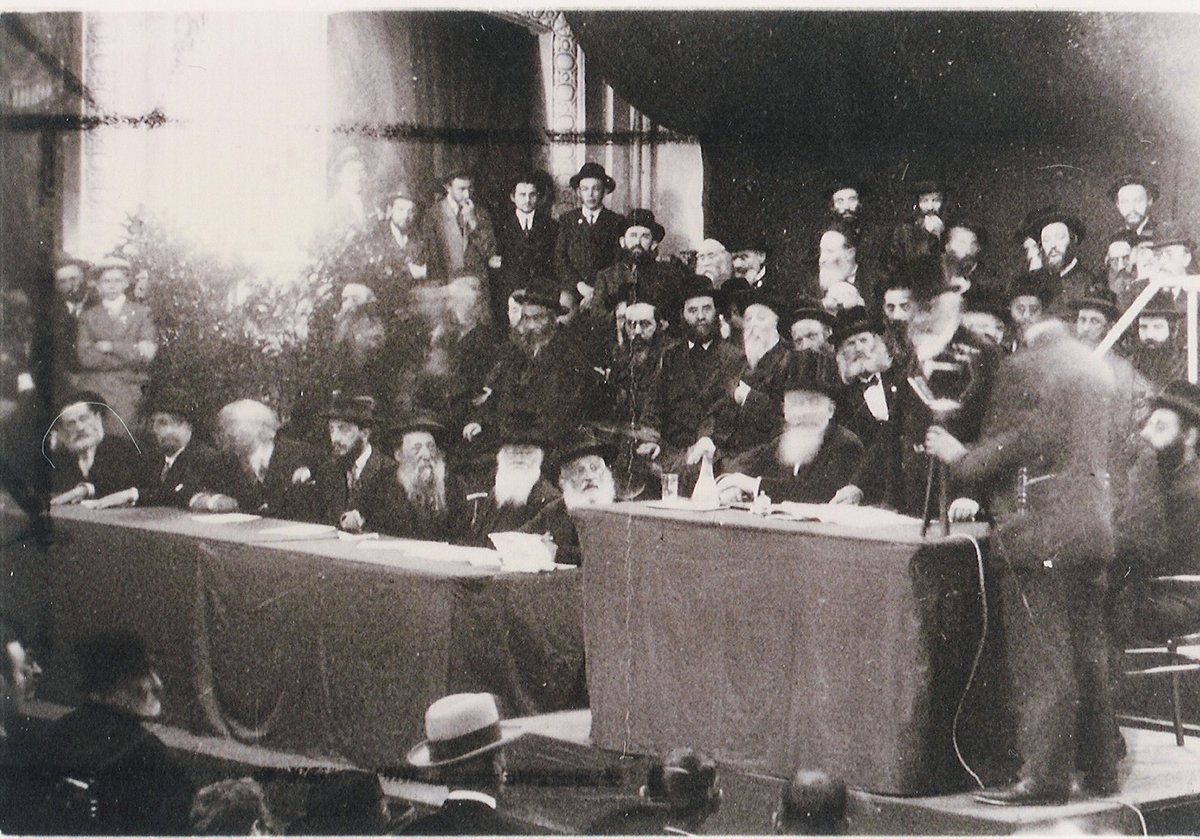
Vienna, September 1929. The Second Knessiah Gedolah — the great assembly of Agudath Israel — convened in the city. Two hundred and sixty delegates attended. The assembly coincided with the completion of Tractate Zevachim of the Babylonian Talmud, the first volume to be finished under the new Daf Yomi program. Daf Yomi — one page of Talmud per day, studied in sync worldwide — had been proposed by Rabbi Meir Shapiro at the First Knessiah Gedolah in Vienna six years earlier. In 1929 the delegates elected Yaakov Rosenheim as president. Seated in the lower rows: Rabbi Yehuda Leib Tsirelson; Rabbi Chaim Ozer Grodzinski of Vilna, then the leading halakhic authority in Lithuania; Rabbi Ber Friedman of Tshortkov. Behind them: Rabbi Baruch Pinchas Rabinowitz of Skalat; Rabbi Wolf Pappenheim, the lay leader of Vienna's Galician Orthodox community; Rabbi Chaim Meir Hager of Vizhnitz, the Imrei Chaim; Rabbi Shalom Yosef Friedman of Sadigura-Chernowitz; Rabbi Avraham Yaakov Friedman of Sadigura, the Abir Yaakov, beside his father-in-law Rabbi Yitzhak Meir Heshel of Kopyczynce.
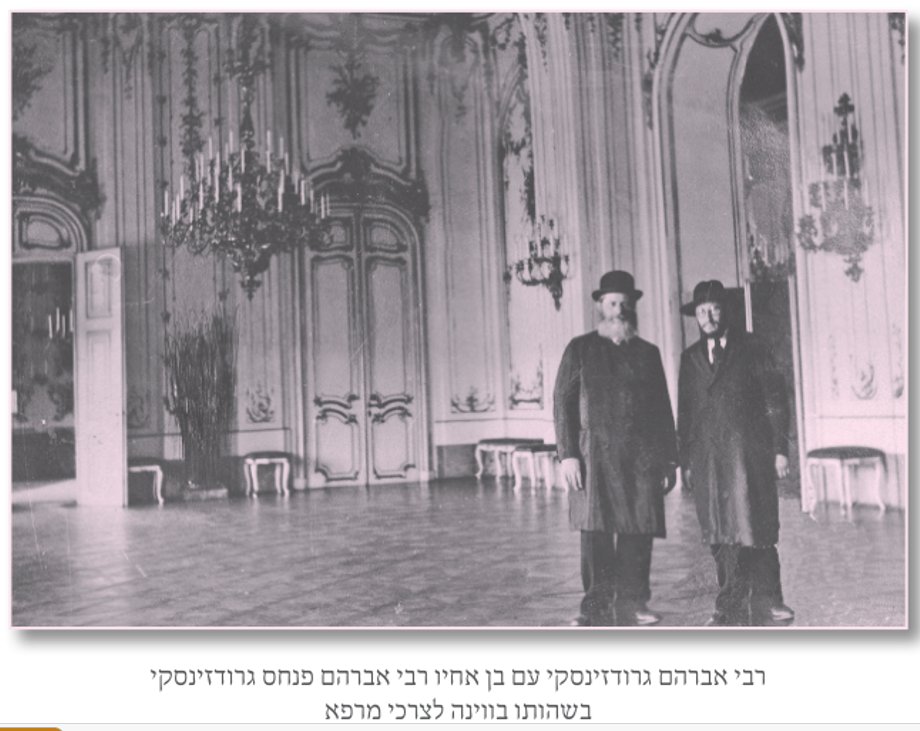
The Schönbrunn Palace gardens in Vienna, between 1929 and 1939. Rabbi Avraham Grodzinski with his nephew Rabbi Avraham Pinchas Grodzinski. According to the biography Yachid b'Doro, Rabbi Avraham was in Vienna for medical care. Vienna's hospitals and sanatoria drew patients from the religious communities of Eastern Europe throughout the interwar decades; Schönbrunn's gardens — opened to the public after the fall of the Habsburgs in 1918 — were a customary place of recovery between treatments. Rabbi Avraham Grodzinski was the mashgiach — spiritual mentor — of the Slabodka Yeshiva in Lithuania, the leading institution of the Mussar movement.
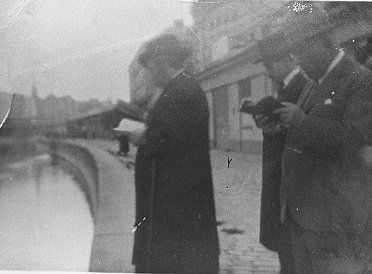
Vienna, between 1936 and 1939. Rabbi Avraham Yehoshua Heshel of Kopyczynce on the bridge over the Danube. He is reciting Tashlich, the Rosh Hashanah prayer in which sins are symbolically cast into flowing water. The Kopyczynitzer Rebbe paired the recitation with the Thirteen Attributes of Mercy, the thirteen names of God drawn from Exodus 34 and recited in Hasidic practice on days of judgement. The Galician and Bukovinian rebbes of Vienna gathered their followers at the Danube each Rosh Hashanah for this rite — a continuity of practice they had brought with them from the rivers of Galicia.
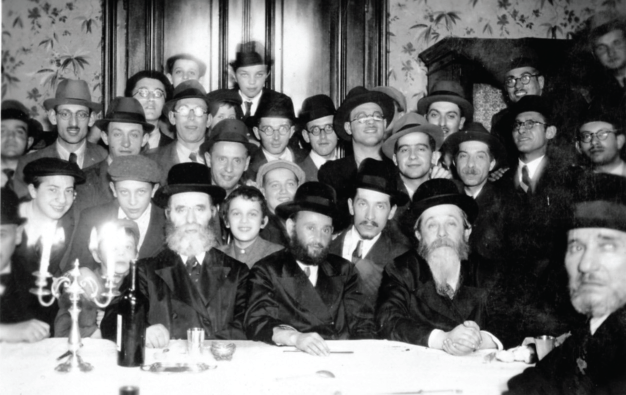
Vienna, 1937. The wedding of Rabbi Avraham Yaakov Teitelbaum. Rabbi Avraham Yehoshua Heshel of Kopyczynce and his brother-in-law Rabbi Avraham Yaakov of Sadigura attended. The two were close: their wives were sisters, daughters of Rabbi Yitzchak Meir Heshel of Kopyczynce, and their courts in Vienna operated as a single extended family. Rabbi Teitelbaum would later cross the Atlantic and lead the Young Agudath Israel of America. The picture is one of the last group portraits of the Vienna Hasidic leadership before the Anschluss of March 1938.
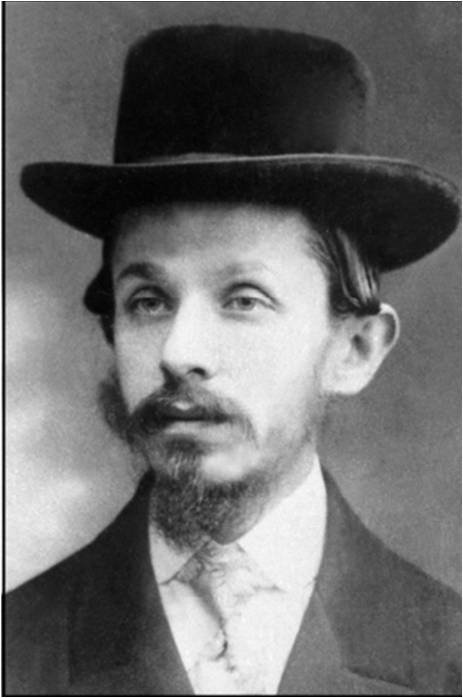
The exhibit follows a community that ended in 1938. In March of that year, the Anschluss brought Nazi rule to Austria. The rabbis pictured in this exhibit left Vienna over the months that followed. Rabbi Yisrael of Husiatyn had already made aliyah in 1937; Rabbi Avraham Yaakov Friedman of Sadigura obtained a visa to Palestine and re-established his court in Tel Aviv. Rabbi Avraham Yehoshua Heshel of Kopyczynce was arrested by the Gestapo and, according to his followers, forced to scrub the pavement of Vienna with a toothbrush. He refused to leave the city while his Hasidim remained. Once most had escaped or been deported, he sailed for New York in the spring of 1939. He re-established the Kopyczynce shtibl on the Lower East Side of Manhattan, moved the court to Borough Park in 1965, and died in 1967.