
Exhibit · Article
All Named Avraham
A rabbinic generation across Europe and America, 1899 — 1944
Twenty-two rabbis. One first name. The surnames — Akshtain, Horowitz, Heshel, Kahana Shapiro, Rokeach, Sofer, Elishiv — name Hasidic dynasties, Lithuanian seminaries, and Galician courts. The first names — every one of them Avraham — name a generation that crossed oceans, addressed parliaments, gathered at Lublin, and walked out of the camps.
6 min read
All Named Avraham. A rabbinic generation across Europe and America. 1899 to 1944.
The exhibit gathers photographs of rabbis from a single generation who shared one name: Avraham. They led communities across Eastern Europe, the British Mandate of Palestine, and North America. The name itself was a common choice in Jewish naming custom — children were often named for the patriarch Abraham, or for an ancestor named Avraham. Several of the men in this exhibit also carried the name of the Apter Rov, Rabbi Avraham Yehoshua Heshel of Mezhybizh, the eighteenth-century Hasidic master whose descendants kept the name across generations. The photographs span the years 1899 to 1944 — from the late Habsburg and Russian empires, through the First World War, the interwar republics, the Second World War, and the Holocaust.
They led communities across Eastern Europe, the British Mandate of Palestine, and North America. The name itself was a common choice in Jewish naming custom — children were often named for the patriarch Abraham, or for an ancestor named Avraham. [short pause] Several of the men in this exhibit also carried the name of the Apter Rov, Rabbi Avraham Yehoshua Heshel of Mezhybizh, the eighteenth-century Hasidic master whose descendants kept the name across generations.
They led communities across Eastern Europe, the British Mandate of Palestine, and North America. The name itself was a common choice in Jewish naming custom — children were often named for the patriarch Abraham, or for an ancestor named Avraham.
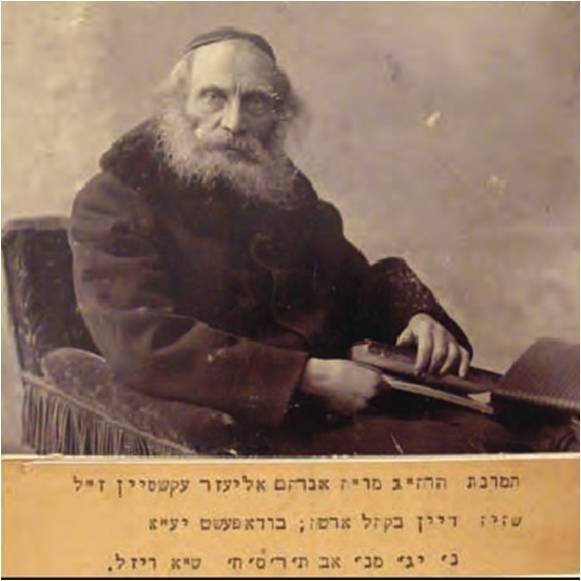
Budapest, between 1899 and 1907. Rabbi Avraham Eliezer Eckstein, dayan of Budapest. A dayan is a judge in a rabbinical court — a beit din — which adjudicates matters of Jewish religious law, from marriage and divorce to commercial disputes. In this period Budapest housed one of the largest Jewish communities in Europe, with a Neolog majority and a substantial Orthodox kehilla. The dayanim of the Orthodox community served alongside the chief rabbinate in maintaining religious courts under the Habsburg-era communal arrangement.
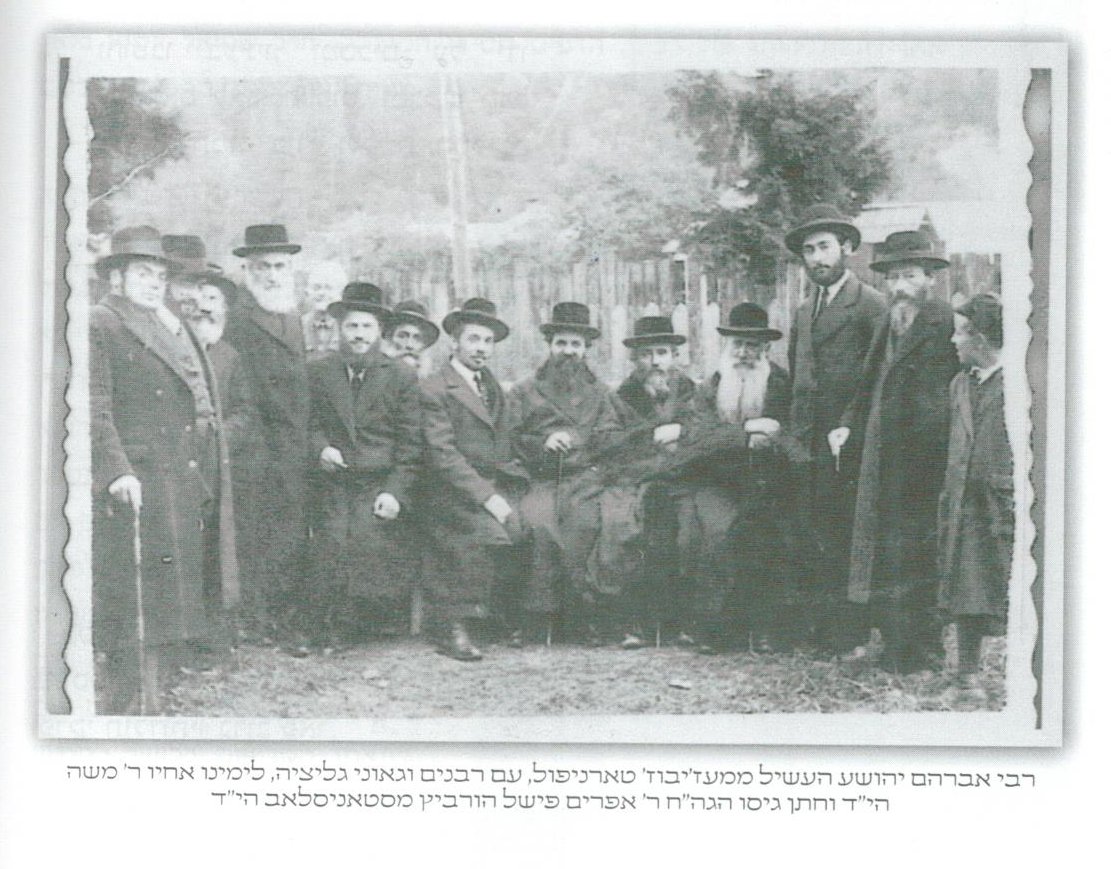
Between 1919 and 1925. Rabbi Avraham Yehoshua Heshel of Mezhbuzh-Ternopil, in the center. To his right, Rabbi Meir Arik. To his left, his brother Rabbi Moshe. He was a great-grandson of the Apter Rov — Rabbi Avraham Yehoshua Heshel of Apta and later Mezhybizh, who died in 1825. The Apter Rov bore the title Ohev Yisrael, Lover of Israel, after the posthumous collection of his teachings. His descendants founded the Mezhybizh, Kopyczynce, Zinkov, and related courts, and many carried his name into the twentieth century. Mezhybizh, in present-day western Ukraine, was the home of the Baal Shem Tov, the founder of Hasidism in the eighteenth century.
Two photographs of two Avrahams in Vienna. On one side, Rabbi Avraham Yehoshua Heshel of Mezhbuzh-Ternopil, in a carriage with his uncle Rabbi Yisrael of Husiatyn and his brother Rabbi Moshe. The picture dates between 1924 and 1935. On the other side, Rabbi Avraham Yehoshua Heshel of Kopyczynce with his brother-in-law Rabbi Avraham Yaakov of Sadigura, the Abir Yaakov. The picture dates between 1929 and 1939. After the First World War, the Habsburg Empire fell apart and Galician and Bukovinian Hasidic courts re-established themselves in Vienna as refugees. The Sadigura court — descended from Rabbi Yisrael of Ruzhin — moved there in 1914 and led its Hasidim from the city for the next twenty-four years.
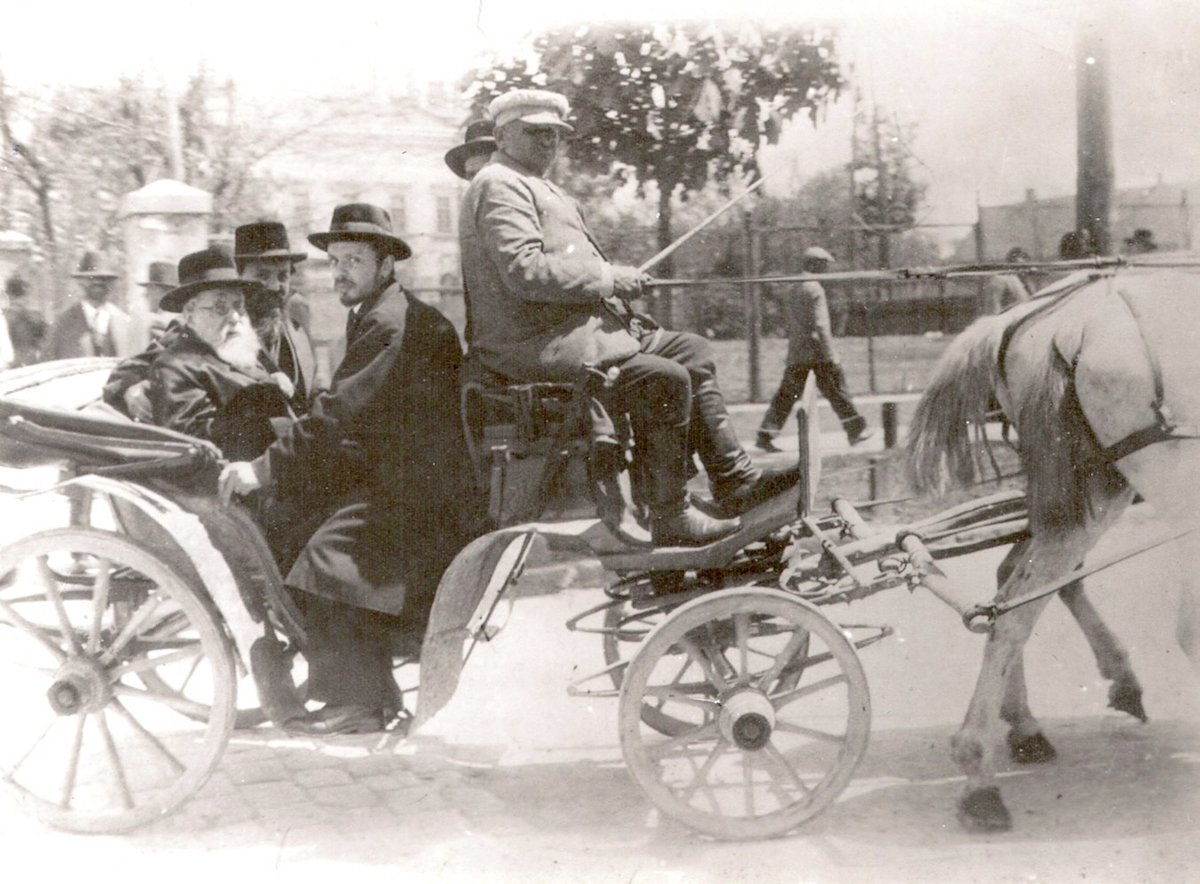
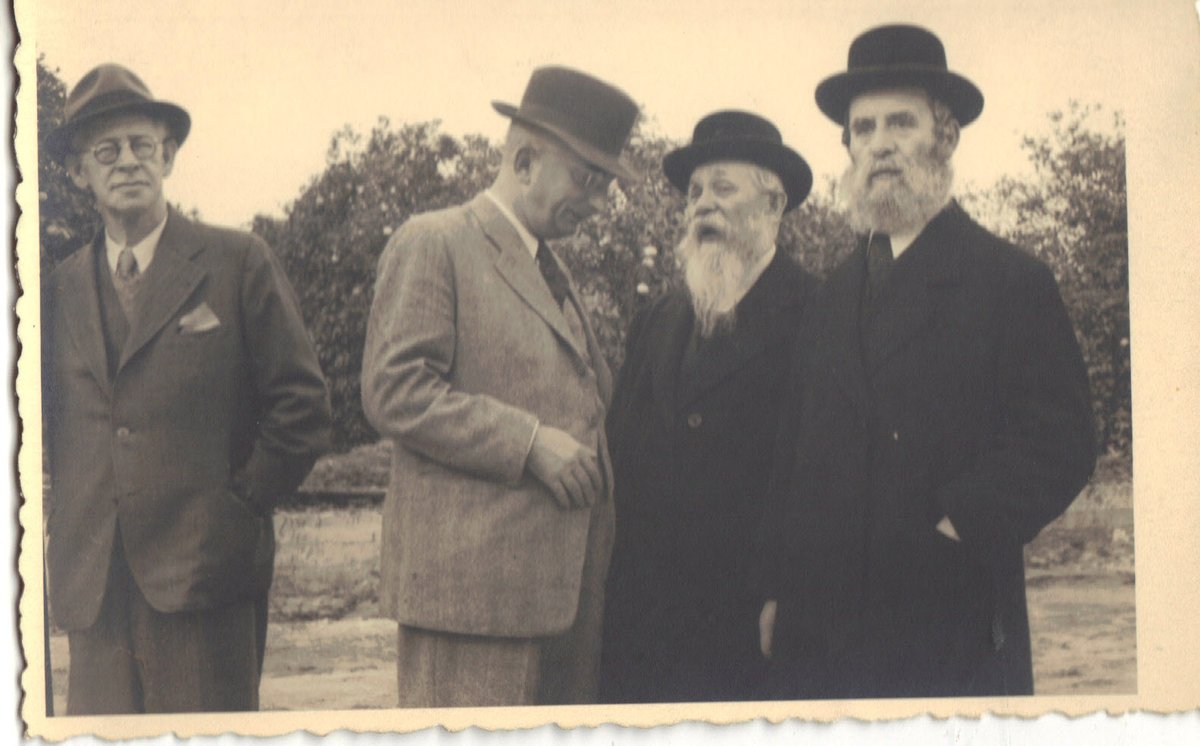
Rabbi Avraham Yehoshua Heshel of Mezhbuzh-Ternopil Sitting in a Carriage on the Streets of Vienna with his Uncle Rabbi Yisrael of Husiatin — תרפ"ה-תרצ"ה / Rabbi Avraham Yehoshua Heshel of Kopyczynce and his brother-in-law Rabbi Avraham Yaakov 'Abir Yaakov' of Sadigura — תר"צ-תרצ"ט
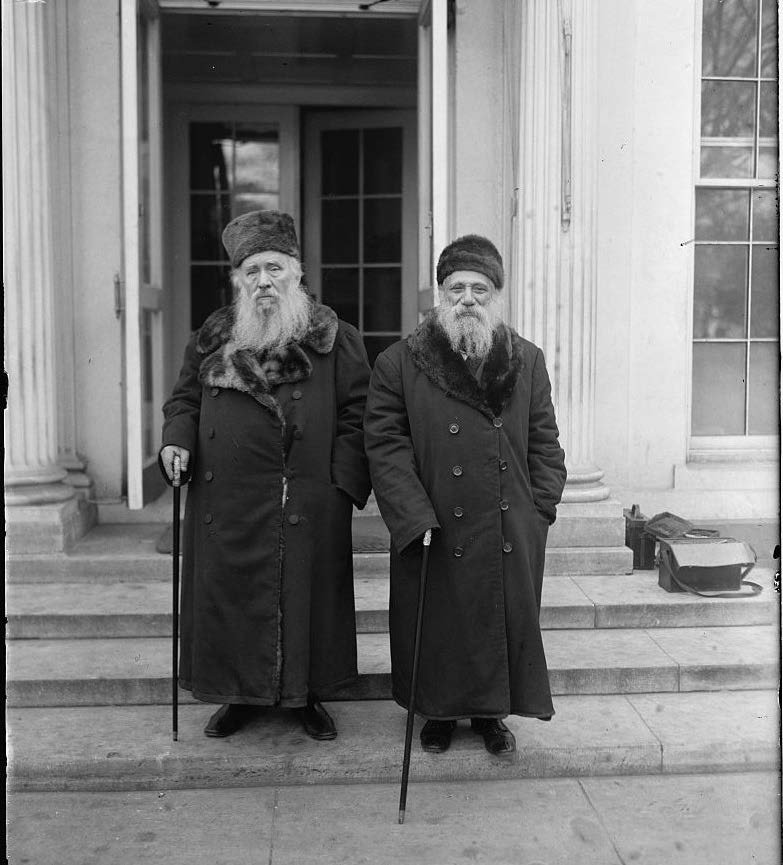
Between 1929 and 1940. Rabbi Avraham Eliyashiv. He was the father of Rabbi Yosef Shalom Eliyashiv. Born in Šiauliai, Lithuania, in 1910, Yosef Shalom emigrated with his parents to British Mandate Palestine in 1922. He would live until 2012, and in the second half of the twentieth century became the leading halakhic authority of Lithuanian-tradition Jewry in Jerusalem. Avraham Eliyashiv was the son-in-law of the kabbalist Rabbi Shlomo Eliyashiv, known as the Leshem, whose surname the family adopted.
He was the father of Rabbi Yosef Shalom Eliyashiv. Born in Šiauliai, Lithuania, in 1910, Yosef Shalom emigrated with his parents to British Mandate Palestine in 1922. He would live until 2012, [short pause] and in the second half of the twentieth century became the leading halakhic authority of Lithuanian-tradition Jewry in Jerusalem.
He was the father of Rabbi Yosef Shalom Eliyashiv. Born in Šiauliai, Lithuania, in 1910, Yosef Shalom emigrated with his parents to British Mandate Palestine in 1922. He would live until 2012,
Two photographs of Rabbi Avraham Dov Kahana Shapiro. In one, he represents Judaism at the opening of the Lithuanian parliament in Kaunas. The picture dates between 1923 and 1939. Kahana Shapiro became Chief Rabbi of Kovno in 1923 and held the position until his death in February 1943. He was the author of Devar Avraham, a three-volume collection of responsa. In the other, taken in 1924 in Montreal, he stands with Rabbi Moshe Mordechai Epstein and Rabbi Avraham Yitzchak Kook during their visit to North America. Epstein led the Slabodka Yeshiva in Lithuania; Rav Kook was Ashkenazi Chief Rabbi of British Mandate Palestine. The three traveled together in March 1924 to raise funds for the yeshivot of Eastern Europe and Eretz Yisrael, sailing from Cherbourg on the S.S. Olympic and arriving in New York on March 18.
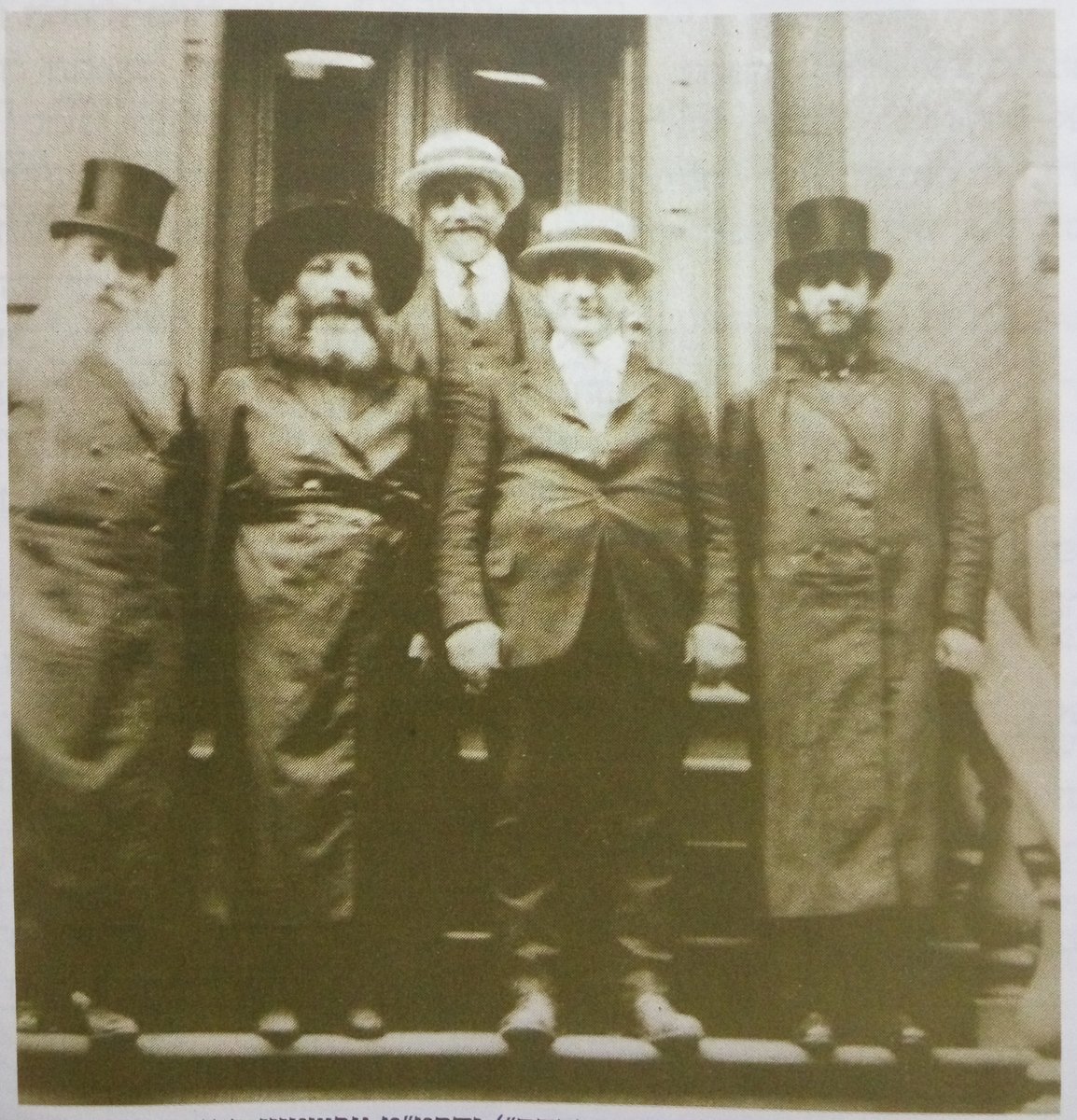
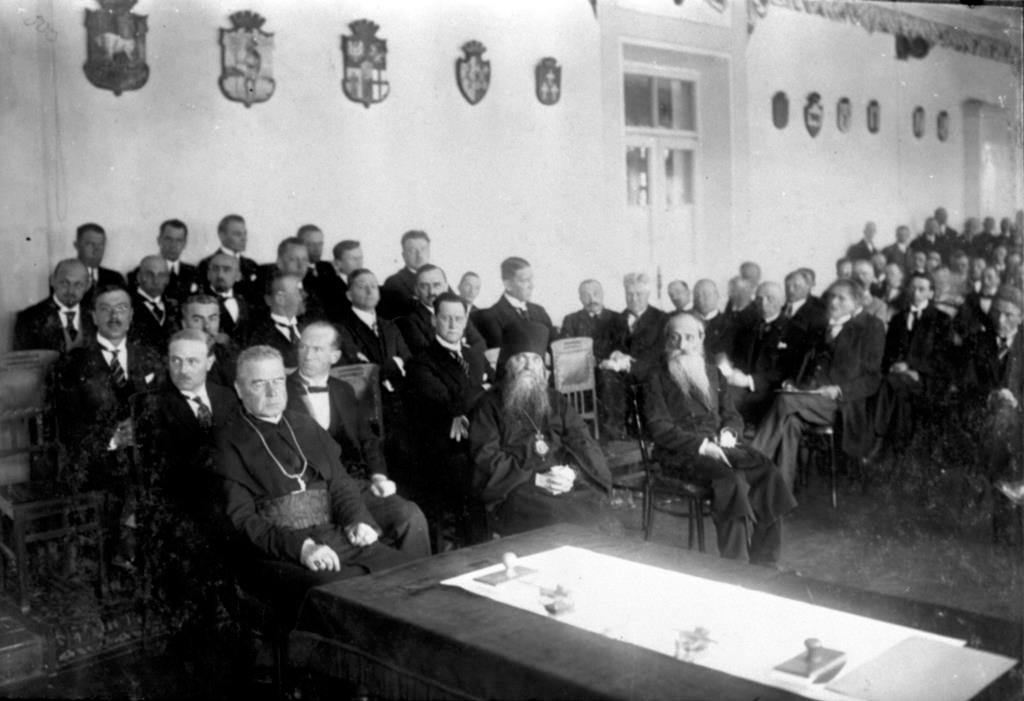
Rabbi Avraham Dov Kahana Shapiro Together with Rabbi Moshe Mordechai Epstein and Rabbi Avraham Yitzcak Kook during their Visit to America and Canada — תרפ"ד / Rabbi Avraham Dov Kahana Shapira with Religious Leaders at the Opening of the Lithuanian Parliament in Kaunas — תרפ"ד-תרצ"ט
Epstein led the Slabodka Yeshiva in Lithuania; Rav Kook was Ashkenazi Chief Rabbi of British Mandate Palestine.
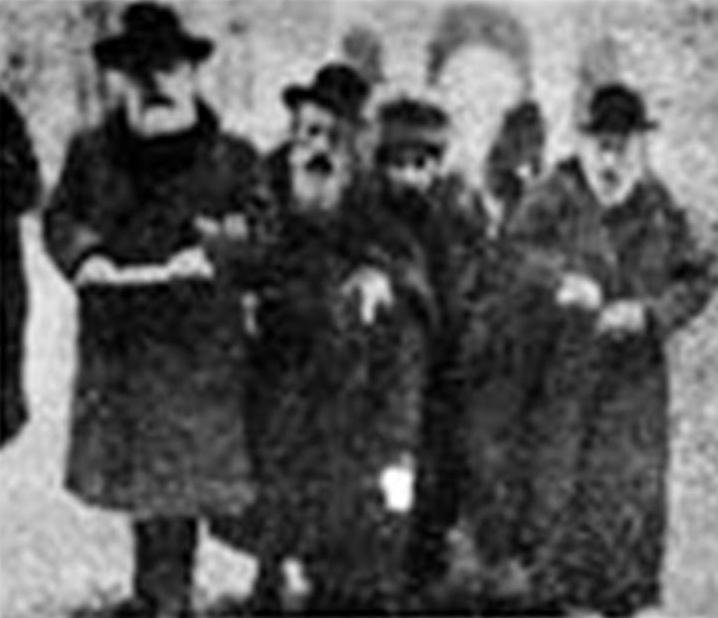
Warsaw, winter 1929. Rabbi Aharon Rokeach of Belz arrived in the city, second from the right, for a rabbinical gathering called to address Polish state decrees affecting Jewish religious life. The gathering took place against the background of pressure on shechita — kosher ritual slaughter — and on the autonomy of Jewish religious schooling under the Second Polish Republic. Restrictive legislation around shechita would intensify through the 1930s. From right to left: Rabbi Menachem Manish, the Rabbi of Ternopil, author of Chabatzelet HaSharon; Rabbi Aharon of Belz; the gabbai Rabbi Mendel Landman; Rabbi Avraham Chaim David Schreiber, president of the Galician group. Rabbi Aharon was the fourth Rebbe of Belz, leading the dynasty from 1926.
Five photographs of rabbis named Avraham across the 1930s. Rabbi Avraham Dov Kahana Shapiro with Rabbi Yosef Tzvi Carlebach, Rabbi of Hamburg, at the train station in Lugano, Switzerland. Carlebach would be deported to Riga in 1941 and murdered there in 1942. Rabbi Avraham Chaim David Sofer. Rabbi Avraham Eliyashiv. Rabbi Avraham Abish Horowitz, Chief Rabbi of Krule, with his son Rabbi Shmuel Tzvi Horowitz of Spinka — Williamsburg. The Spinka dynasty, founded in nineteenth-century Hungary, would re-establish itself in Brooklyn after the war. Rabbi Avraham Yehoshua Heshel of Mezhbuzh-Ternopil in Kerenitz, 1938 — one year before the German invasion of Poland.
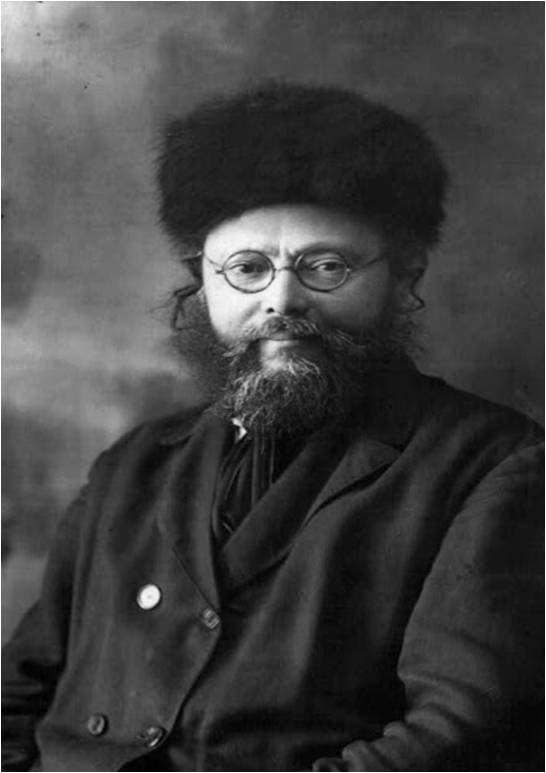
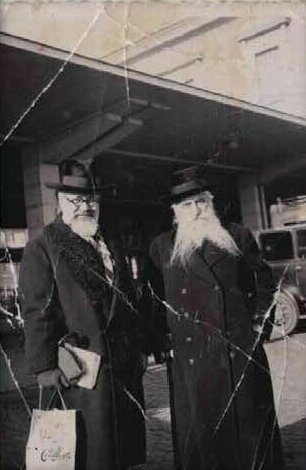
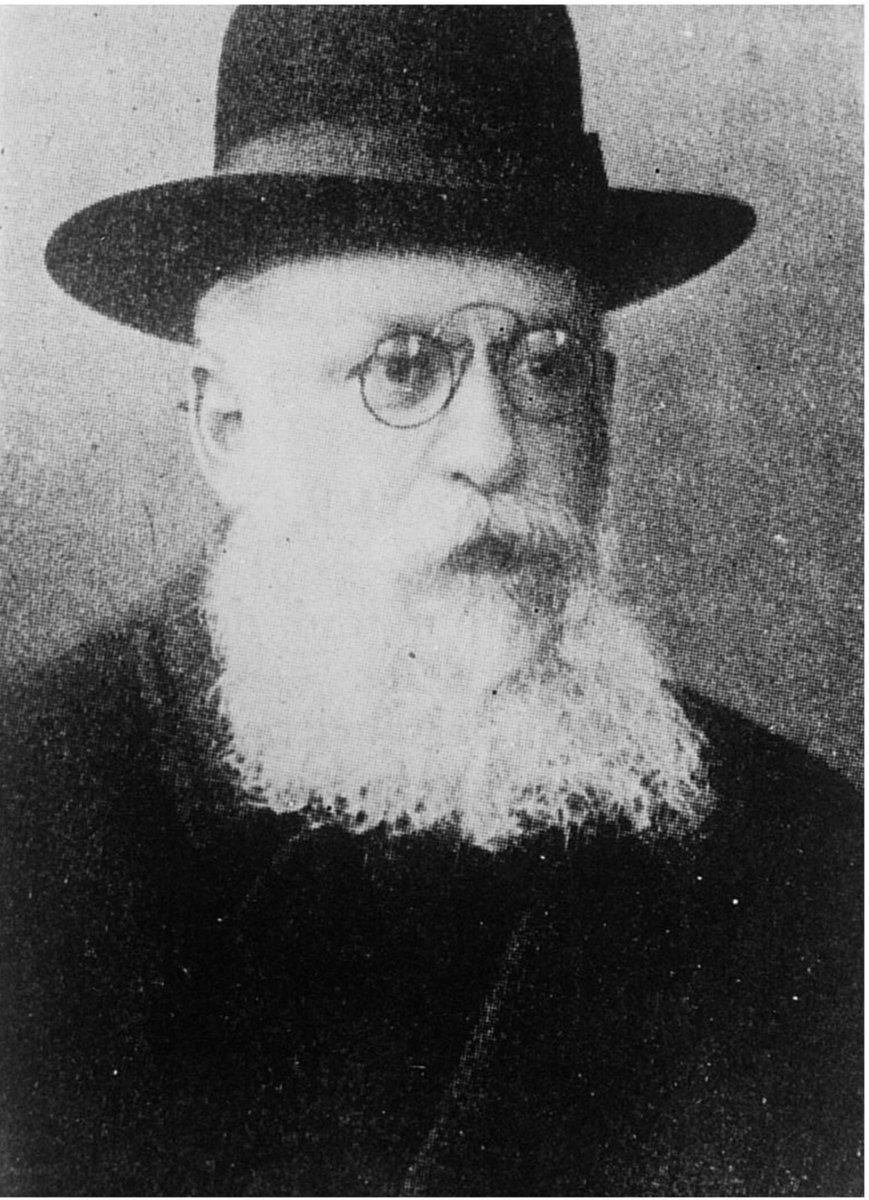
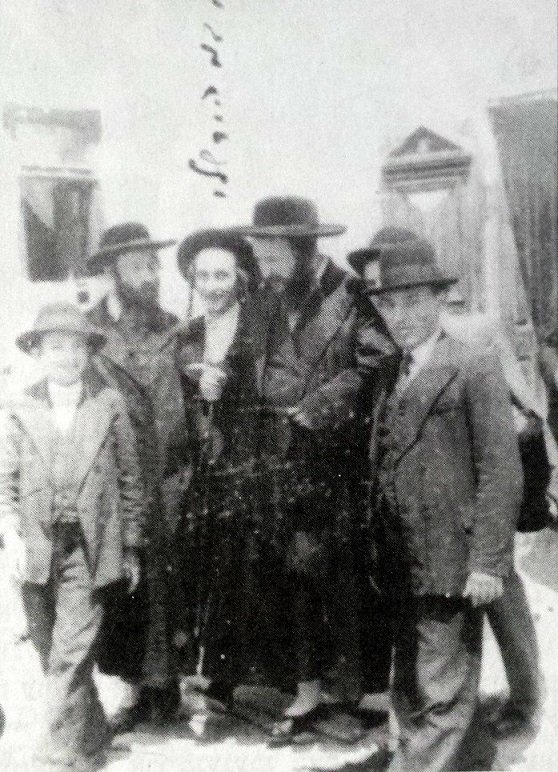
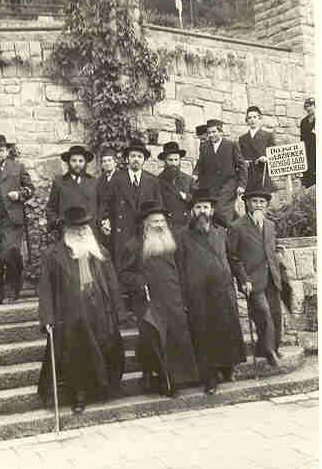
Carlebach would be deported to Riga in 1941 and murdered there in 1942.
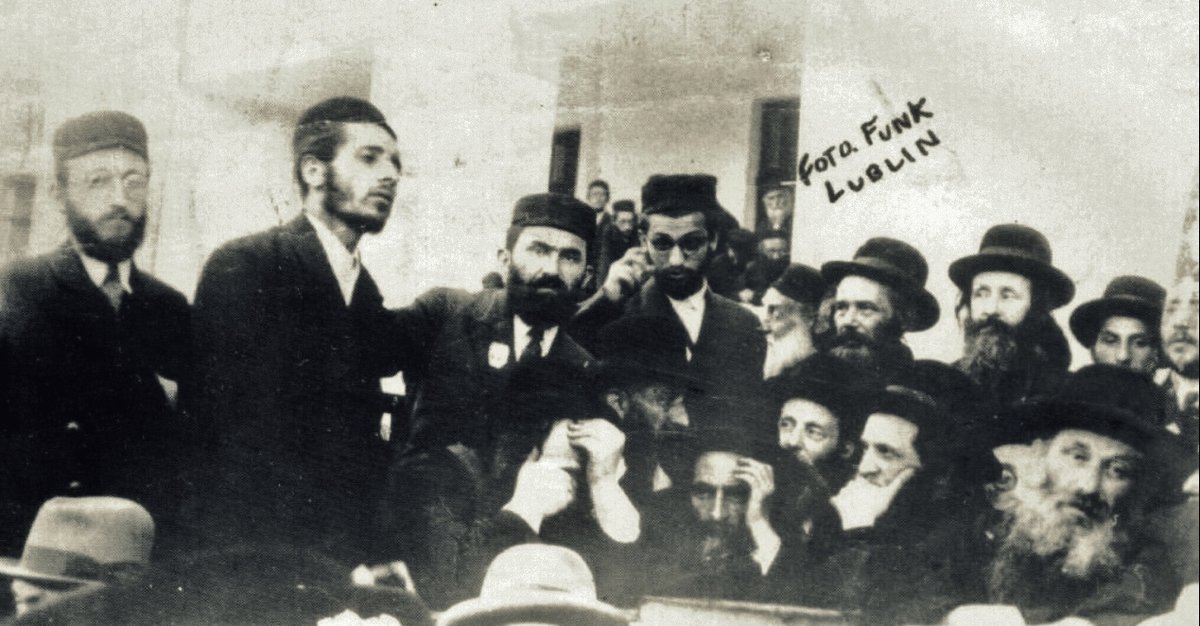
Lublin, June 27, 1938 — the 28th of Sivan, 5698. The Celebration of the Torah at Yeshivas Chachmei Lublin. From right to left: Rabbi Aryeh Tzvi Frumer of Kuzhiglov, author of Eretz Tzvi; Rabbi Menachem Ziemba; Rabbi Avraham Weinberg, author of Reishis Bikkurim; Rabbi Shmuel Shlomo of Radzin. Standing on the far left, a student: Mordechai Yehuda Lubart. Yeshivas Chachmei Lublin had been founded in 1930 by Rabbi Meir Shapiro, who is also remembered for originating the Daf Yomi program — a global cycle in which Jews study one page of the Talmud each day, completing the whole in seven and a half years. The yeshiva's library held some twenty-two thousand volumes; its building was the largest yeshiva structure in Europe. Rabbi Frumer became rosh yeshiva — head of the yeshiva — in 1934. In September 1939 the German army occupied Lublin. The yeshiva was closed and its library destroyed. Rabbi Frumer was deported to Majdanek and murdered there in spring 1943. Rabbi Ziemba was killed by German forces in the Warsaw Ghetto on April 24, 1943, during the ghetto uprising; he had been one of the few rabbinic leaders to call publicly for armed resistance.
he had been one of the few rabbinic leaders to call publicly for armed resistance.
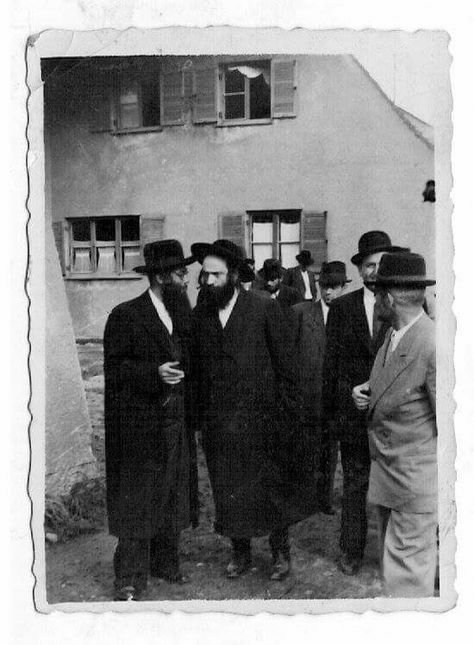
Föhrenwald Displaced Persons Camp, between 1944 and 1949. Rabbi Avraham David Horowitz, Av Beis Din of Strasbourg, in conversation with Rabbi Yekusiel Yehudah Halberstam of Sanz-Klausenburg. Halberstam had lost his wife and eleven children in the Holocaust; he would later refound the Sanz-Klausenburg dynasty and establish the town of Kiryat Sanz in Netanya. Föhrenwald, in the Bavarian forest south of Munich, was one of the postwar camps that housed Jewish survivors. In October 1945, on the order of General Eisenhower, it was designated an exclusively Jewish DP camp; with Rabbi Halberstam and his followers present, it became the center of Hasidic life in the American occupation zone. It was the last DP camp in Europe to close, in 1957. Hebrew documents of the period called the survivors She'erit HaPleita — the surviving remnant, a phrase drawn from the books of the Prophets. Rabbi Horowitz survived the war after losing his family and would go on to rebuild the Adath Israel community of Strasbourg as its rabbi for over three decades, later serving as Av Beis Din — head of the rabbinical court — of the Edah HaChareidis in Jerusalem.
Halberstam had lost his wife and eleven children in the Holocaust; he would later refound the Sanz-Klausenburg dynasty and establish the town of Kiryat Sanz in Netanya.